
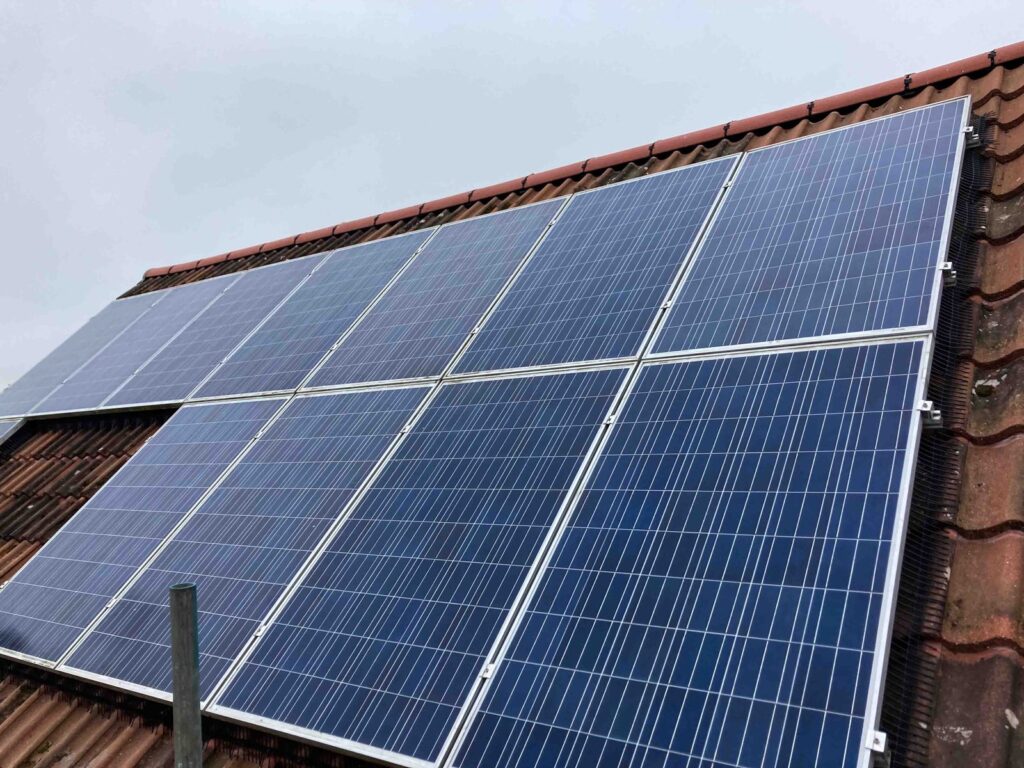
The best way to get more from your solar panels in winter is to use as much of your daytime generation as you can while it is being produced, keep an eye on the system so faults do not go unnoticed, and make sure nothing is shading the roof when the sun is at its lowest. None of that needs special equipment, and most of it costs nothing.
Winter output will always be lower than summer output, as we explain in our article on whether solar panels work in winter in the UK. This guide picks up where that one stops and looks at what you can actually do about it from October to March.
How can you use more of your solar power during the day?
The electricity you generate and use straight away is worth more to you than the electricity you export, because every unit used at home is a unit you do not have to buy. In winter there is less to go round, so timing matters more. Short bright spells around the middle of the day are your best opportunity.
If you are at home, or can set appliances to run on a timer, shift the jobs that use the most power into the hours between mid-morning and mid-afternoon. A dishwasher, washing machine and tumble dryer are the obvious candidates, and most modern models have a delayed start. A household in Rushden that runs the washing machine at 11am on a bright day uses its own power. The same wash at 7pm comes from the grid.
Heating is a bigger load than any appliance, and it is worth thinking about how it interacts with your panels. If you heat water with an immersion heater, a diverter can send surplus solar power into the hot water cylinder rather than exporting it. That is a well-established way of turning winter sunshine into stored heat, although it needs to be fitted correctly to the existing wiring and the cylinder, so it is a job for a qualified electrician. It is also worth asking whether your current set-up suits it, since not every property or cylinder does.
How do you know your solar system is working properly?
Many households install panels and then rarely look at them. That is understandable, but a fault in January can run unnoticed until the spring, and by then you have lost weeks of generation. Most inverters come with a monitoring app or a web portal that shows daily and monthly output, and it takes a minute to check it once a week.
What you are looking for is a pattern that makes sense. A bright day should produce more than a dull one, and this December should look broadly similar to last December if the weather was comparable. If production flatlines on a sunny day, if the inverter display shows an error code, or if the app has stopped reporting altogether, there may be a fault or a lost Wi-Fi connection. Sometimes the answer is as simple as the router having been moved or replaced, which breaks the link between the inverter and the app.
Keep a note of what the inverter normally shows. A quick photo of the display on a clear day gives you something to compare against later. If you spot an error code, write it down before calling anyone, because it helps the engineer work out what has gone wrong before they arrive. Do not open the inverter or touch the cabling yourself.
Do shade and debris reduce winter output?
They can, and winter makes shading worse because the sun sits so low. A branch that clears the roof by a comfortable margin in June can throw a shadow across half the array in December. Walk around your property on a bright day and look at the roof from different angles. Check whether a tree has grown, whether a neighbour has built an extension or fitted a tall aerial, and whether a chimney stack shades the same panels every afternoon.
Partial shading on one panel can drag down the whole string if the system has no optimisers or module-level electronics. If you can see a consistent shadow, it is worth asking an installer whether the layout could be improved. Trimming a tree is often the simplest answer, although you should agree it with the owner if it is not yours, and check for any preservation orders before anyone picks up a saw.
Debris such as moss and bird droppings is a lesser issue in the UK because rain washes the panels regularly, but a roof with overhanging trees can collect a lot of debris. Birds nesting under panels are a particular problem on some roofs, which can lead to damage to cabling. Proofing the edges of an array with mesh is a common fix. Cleaning and proofing should be done by someone with the right access equipment. Climbing onto a wet or frosty roof is dangerous, and a ladder against the edge of the array can damage the panels.
Does a battery help in winter?
It can, although in a different way from summer. On a typical December day there is rarely a big surplus to store, so the battery may not fill from solar alone. Many systems can also charge from the grid during cheaper off-peak periods if you are on a suitable time-of-use tariff, and then discharge in the evening peak. Whether that makes financial sense depends on the tariff, the battery size and how much electricity you use in the evening.
If you already have a battery, check its settings. Some are set to a summer-friendly mode by default. A change to how it prioritises charging, how much reserve it holds, or when it is allowed to import can make a noticeable difference. If you are still deciding whether a battery is right for you, our separate article on whether a home battery is worth it looks at the question in more detail, and the solar PV and battery storage page explains what we install.
Can solar help with charging an electric car in winter?
If you own an electric vehicle, some home chargers can adjust their charging rate to match the surplus coming from your panels. In winter that surplus is small, so you will often draw most of the charge from the grid, but on bright days the solar contribution is still useful, and a smart charger can also schedule charging for cheaper overnight periods. If you are thinking about a charger, the details are covered on our electric vehicle charging point installation page.
Why is winter a good time for a system check?
The quiet months are a sensible moment to look at the electrical side of a solar installation. An inspection can cover the condition of the isolators, the cable runs, the labelling, the earthing and the inverter. For older systems fitted ten or more years ago, the original inverter may be approaching the end of its working life, and it is better to find that out in January than in June. A service and test also confirms that generation is where it should be.
In Northamptonshire we see a range of properties, from Victorian terraces in Northampton with awkward loft access to newer estates around Kettering and Corby, and rural homes with long cable runs from outbuildings. Each has different issues, and an annual look at the system is a reasonable habit whatever the age of the building.
When should you call a qualified electrician?
Call a professional promptly if the inverter shows an error that does not clear after a restart, if generation drops sharply with no change in the weather, if you can smell burning or see scorch marks near the inverter, consumer unit or isolators, or if you hear an unusual buzzing or humming. If a storm has left a panel loose, cracked or hanging, keep clear of the area and arrange for it to be checked.
The same applies if you want to alter the system, add a battery, or connect a diverter or charger. These changes affect the safety and the generation arrangements of the installation, so they should be designed and carried out by someone competent and registered for the work. ST Electrics is MCS accredited for solar PV, and our footer lists our NICEIC approved contractor status and RECC membership.
Frequently asked questions
How often should I check my solar monitoring app?
Once a week is plenty for most households. Look for sensible daily output and for any error messages. If a sunny day shows almost no generation, investigate.
Can I clean my own solar panels?
It is better not to. Roof access is risky, and panels can be damaged by the wrong equipment or a ladder resting on the array. Ground-level checks are fine, but anything on the roof should be left to a professional.
Should I change my tariff if I have solar panels?
It may be worth comparing tariffs, particularly if you have a battery or an electric vehicle. Export tariffs and time-of-use import rates vary between suppliers, and the best choice depends on how you use power. We cannot recommend a supplier, but we can explain how your system will interact with different options.
Will an old inverter cause problems in winter?
Inverters tend to be the first major component to need replacing. If yours is showing faults or has stopped communicating, a winter check is sensible.
Want a second opinion on your system?
If your panels seem to be underperforming, or you would like to talk through batteries, diverters and winter use, contact the team and we will help you work out what makes sense for your property.